
Flake, Metallic, Solid or Quartz: Choosing an Epoxy Floor Finish in Southwest Florida
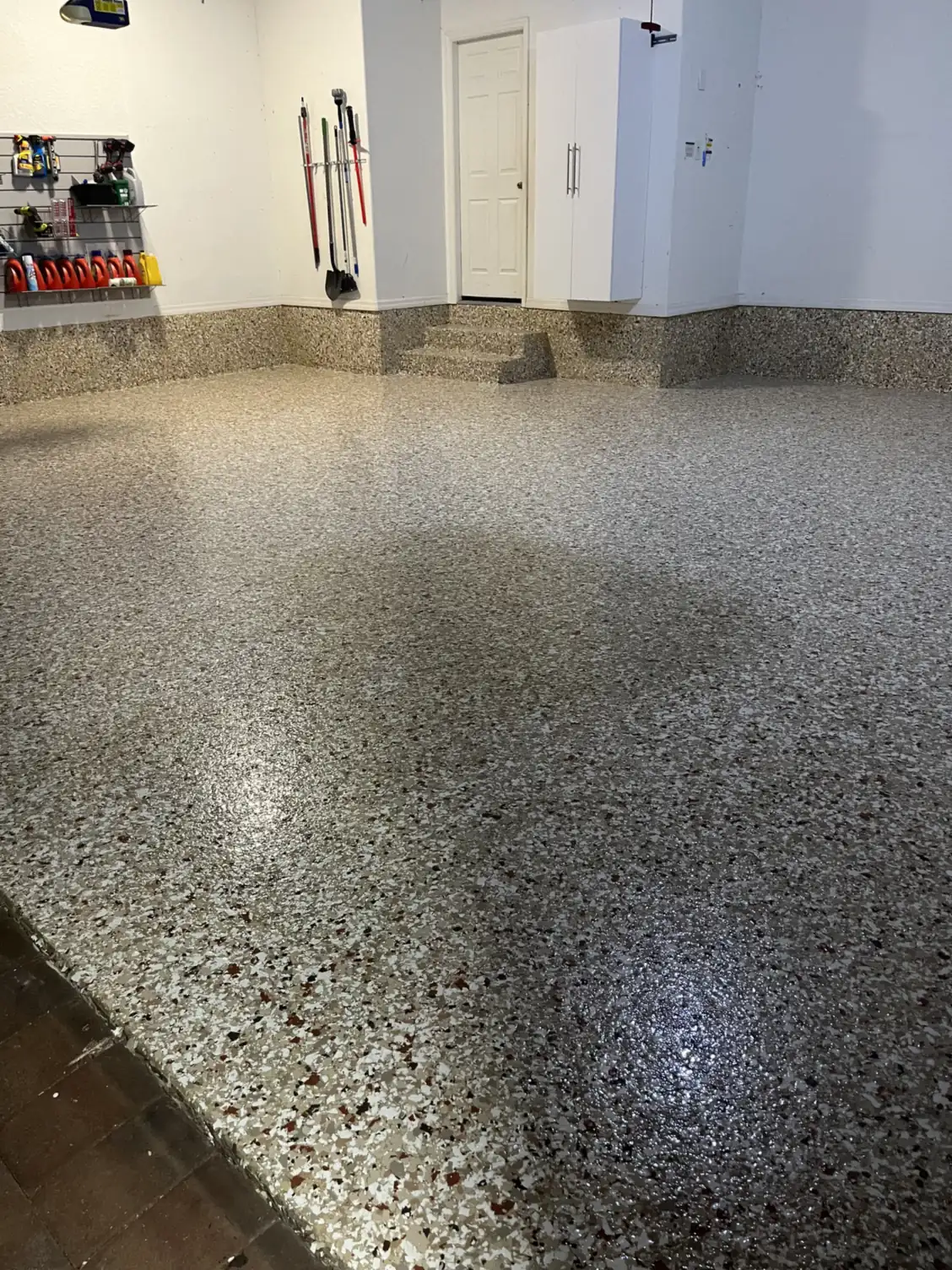
Once you’ve decided to coat your garage floor, the fun part starts: picking how it looks. But the finish isn’t only about color. It changes how the floor hides dirt, how it feels under bare feet or sandals, and how it handles a garage door that’s open to the Florida sun half the day.
Here’s a plain-English guide to the main epoxy floor finishes, the topcoat that goes over them, and how to pick colors and texture for garages, lanais and pool decks in Fort Myers, Cape Coral, Naples, Bonita Springs and Estero.
First, How a Coated Floor Is Built
Most decorative floor coatings are built in layers:
- Prepared concrete. The slab is repaired and ground so the coating can bond.
- Base coat. Usually epoxy, which bonds well to prepared concrete and builds thickness.
- The decorative layer. Flake, quartz or metallic pigment, depending on the look you choose.
- A clear topcoat. This seals the finish and takes the daily wear. On the residential garage floors we install at Seaside Coatings, the topcoat is typically polyaspartic.
The finish you choose mostly changes layer three, and sometimes the texture of layer four. Prep and bonding stay the same no matter which look you pick.
Flake Floors
Flake is the most requested garage finish we install. After the base coat goes down, colored flakes are broadcast across the wet surface, then everything is sealed under a clear topcoat.
Why people like it:
- It hides dust, sand, tire marks and small imperfections in the slab
- It adds a little texture underfoot
- There are many color blends, from light grays to darker mixes
Coverage makes a difference. Full-coverage flake hides small imperfections in the slab and gives the floor more texture. Lighter coverage shows more of the base color between chips. We can show you examples of both.
Best for: everyday two- and three-car garages, workshops, covered lanais and any floor that sees sand and wet tires.
Metallic Epoxy Floors
Metallic pigments mixed into the epoxy move and settle as the coating levels out, so the floor cures with swirls, depth and a high gloss. Every metallic floor comes out a little different, which is part of the appeal.
Keep in mind:
- A glossy, smooth floor shows dust and footprints more than flake does
- It’s smoother underfoot, so think about traction if the floor gets wet
- It takes more hands-on work to install, so ask how it compares in price
Best for: showpiece garages, home gyms, bonus rooms and indoor concrete floors where the floor is the design feature.
Solid Color Floors
We also install solid-color floors. A solid color floor has a clean, uniform look without chips or swirls. It’s a common choice for workshops and utility spaces where you want a simple, bright surface that makes dropped screws and small parts easy to spot.
Keep in mind: a solid color shows dust, scuffs and tire marks more than a flake blend does. Mid-tone grays are more forgiving than very light or very dark colors.
Best for: workshops, utility rooms, storage areas and anyone who prefers a minimal look.
Quartz Floors
Quartz systems broadcast colored quartz granules into the coating and seal them under a clear coat. The result has a finer texture than flake and more grip.
Best for: areas that get wet or see lots of foot traffic, like a garage entry from the pool, a laundry area or a covered lanai.
The Topcoat: Epoxy vs. Polyaspartic
The clear topcoat is what you actually walk and drive on, so it matters as much as the look underneath.
- Epoxy bonds well and builds thickness, which is why it’s often the base coat. Its weak spot is sunlight: epoxy exposed to direct sun can amber or yellow over time.
- Polyaspartic belongs to the polyurea family. It’s UV stable, so it holds its color in sunlight, and it cures fast. That fast cure gives the installer less working time, so experience matters.
For a Florida garage that sits with the door open, a UV-stable topcoat helps the floor keep its color, especially in the first few feet inside the door. That’s why many garage systems use both: an epoxy base for bond and build, and a polyaspartic topcoat on top. For the full comparison, read our guide to epoxy vs. polyaspartic floor coatings.
Choosing Colors That Work in a Florida Garage
Light vs. dark
There’s a trade-off between brightness and hiding dirt:
- Lighter blends brighten a garage, which helps in a space with limited windows or lighting.
- Darker and mid-tone blends hide dirt, dust and tire marks better between cleanings.
- Mixed blends with light, mid and dark chips are a common middle ground.
A simple test: look at the dirt you track in. If your yard and driveway bring in light sand, a blend with some light chips will hide it better than a solid dark floor.
Match what stays
At the estimate, we bring a fan deck (a color chart) so you can look at colors next to the things you won’t change: the garage door, cabinets, walls and the house’s exterior color. Look at the fan deck in your own garage light, in the morning and in the evening. Colors look different under shop lights, daylight from an open door and a single bulb.
Think about resale
If you might sell in the next few years, neutral blends appeal to more buyers. Bold colors are great if it’s your forever home.
Texture and Anti-Slip: Garages, Lanais and Pool Decks
Gloss looks great, but a smooth, glossy floor can get slippery when it’s wet. In Southwest Florida, garage floors get wet from rain blowing in, dripping cars after a summer storm and people walking in from the pool.
Coating manufacturers commonly recommend slip-resistant additives for floors exposed to wet or oily conditions. Texture can come from the finish itself, since flake and quartz both add some grip, and from the topcoat. We add texture to the topcoat as needed. If your floor gets wet often, we’ll talk through how the finished floor will feel.
Garages: flake with a clear topcoat is the common choice. We can add texture if the garage is your main path in from the pool or the yard.
Covered lanais and outdoor kitchens: floors under a roof can use a system much like a garage floor. Quartz or flake gives more grip than a smooth finish.
Pool decks, patios and uncovered floors: these sit in full sun and rain, so they need an exterior system. Seaside Shield is our extremely durable exterior floor coating system for uncovered outdoor floors like pool decks, lanais, patios and driveways. For ideas, see enhancing your pool area with a coating.
A Quick Way to Decide
| If you want… | Consider |
|---|---|
| A floor that hides sand and tire marks | Mid-tone or mixed flake blend |
| A bright workshop | Light flake or solid color |
| A showpiece look | Metallic epoxy |
| More grip where floors get wet | Quartz, or flake with added texture |
| A color that holds up in a sunny garage | A UV-stable polyaspartic topcoat |
| An uncovered pool deck or patio | Seaside Shield |
See Finishes in Person
Photos only go so far. At your estimate, we bring a fan deck (a color chart) so you can look at colors in your own garage light. We’ll also look at your concrete, how much sun the floor gets and how you use it, then help you narrow it down. Browse finished floors in our project gallery, compare systems on our residential epoxy floor coatings page, or see our local pages for Fort Myers, Cape Coral, Naples, Bonita Springs and Estero.
Epoxy Floor Finishes FAQ
What’s the most popular garage floor finish?
Flake is the most requested garage finish we install. It hides dust, sand and tire marks, adds texture underfoot and comes in many color blends.
Is a metallic epoxy floor slippery?
A smooth, glossy floor can be slippery when it’s wet. If a metallic floor will see water, we can add texture to the topcoat as needed. Metallic is best suited to spaces that stay mostly dry.
What color garage floor hides dirt best?
Mid-tone and mixed flake blends hide dirt, dust and tire marks best. Very light and very dark solid colors show the most.
Will my garage floor turn yellow in the sun?
Epoxy exposed to direct sunlight can amber or yellow over time. A UV-stable topcoat, such as polyaspartic, helps a garage floor keep its color. On our residential garage floors, polyaspartic is the typical topcoat.
What’s the best coating for a pool deck?
Uncovered pool decks need an exterior system. Seaside Shield is our extremely durable exterior floor coating system for uncovered outdoor floors like pool decks, lanais, patios and driveways.
Can I see samples before I choose?
We don’t bring physical finish samples to the estimate, but we do bring a fan deck (a color chart) so you can look at colors in your own garage light before you decide.
Ready to Pick Your Floor?
Seaside Coatings is based at 5760 Youngquist Rd in Fort Myers, and most residential installs take about one day, with drive-on time typically about 24 hours, weather permitting. We offer free estimates, in person or virtual, and financing is available through Acorn Finance. Our customers have given us 120+ five-star Google reviews. Call (239) 476-0219, Monday through Saturday, 8 a.m. to 6 p.m., or request your free estimate.